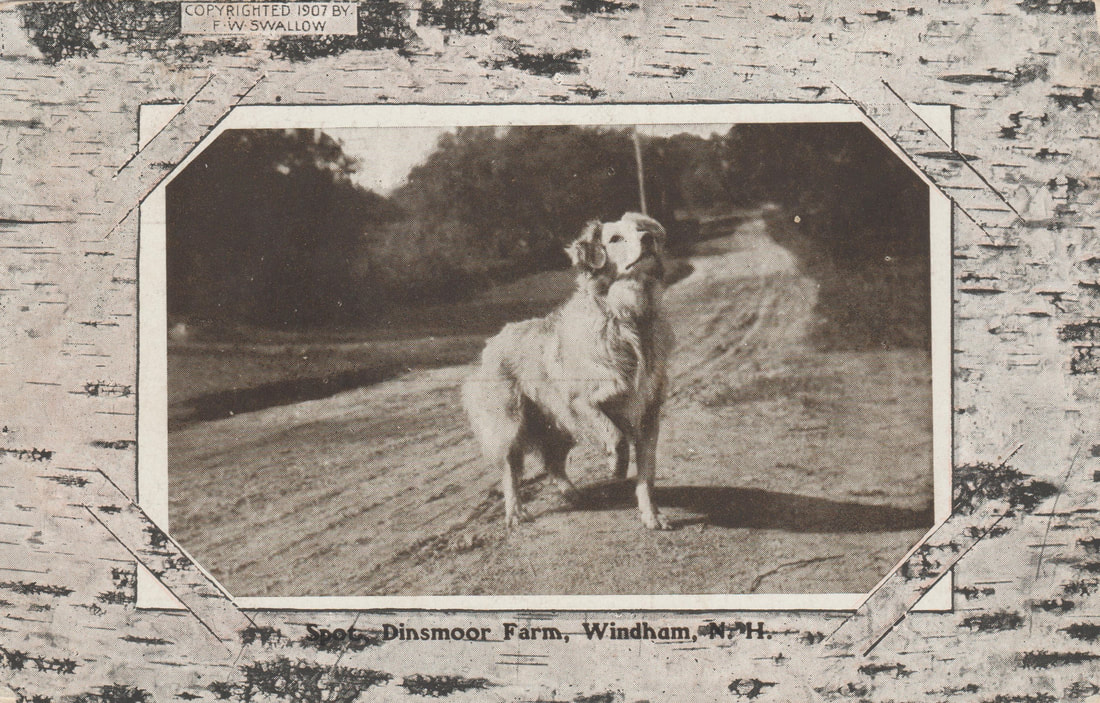
Spot was featured on an early postcard view of Windham
The dogs kept by Windham's earliest settlers would have been much different in appearance from modern pet dogs. In the 18th and early 19th centuries, dogs served a practical purpose in the households of Windham. Many farmers with livestock would have kept dogs as herding or guardian dogs; the job of the latter being to protect livestock from predators such as wolves or bears. Dogs also would have proved useful when hunting in the woods of Windham. Unfortunately, despite the importance of dogs, incidents and anecdotes involving dogs are almost nonexistent in the written histories of Windham.
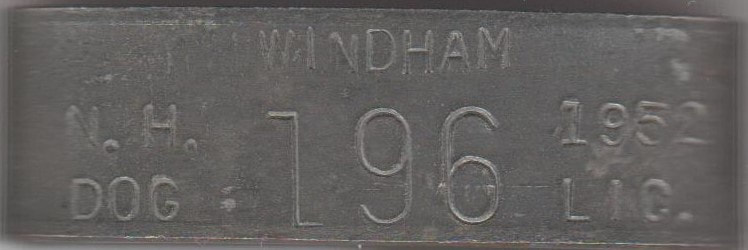
1952 Windham, NH dog tag license for a dog collar
By the mid-19th century, dogs were no longer considered just practical animals, but were instead regarded as companions. This shift in attitude was due in part to the portrayal of dogs in the literature of the period. Dogs appeared as faithful companions in books and magazine articles. It is during this era that pet dogs would have first been introduced to Windham. It appears that by the mid-1860s the population of dogs in Windham had become significant enough where roaming dogs began to cause problems with farmers' livestock. This problem was a common one throughout the nation, and the typical solution to the probably was the "dog tax."
The purpose of a dog tax was to create a fund that could be used by the town to reimburse citizens for any damage done to their livestock by dogs. Such a tax was first implemented in Windham in 1866. In 1888, the dog tax raised $69.00; it seems that none of this tax money was paid out for its intended purpose. When there was leftover dog tax money in the town treasury, the remaining money was used to fund education in the schools of Windham. Eventually this dog tax was phased out and replaced with the more modern dog license. Unlike the dog tax, the purpose of the dog license was more to accurately assess the number of dogs in Windham's households, and provide a way to locate the owner of lost dogs. These licenses have, and are today, issued as tag to be placed on a dog collars; note the 1950s dog license tag shown above.
Sources:
http://www.thedogtrainingsecret.com/blog/history-dogs-america/
https://www.genealogytoday.com/articles/reader.mv?ID=974
The purpose of a dog tax was to create a fund that could be used by the town to reimburse citizens for any damage done to their livestock by dogs. Such a tax was first implemented in Windham in 1866. In 1888, the dog tax raised $69.00; it seems that none of this tax money was paid out for its intended purpose. When there was leftover dog tax money in the town treasury, the remaining money was used to fund education in the schools of Windham. Eventually this dog tax was phased out and replaced with the more modern dog license. Unlike the dog tax, the purpose of the dog license was more to accurately assess the number of dogs in Windham's households, and provide a way to locate the owner of lost dogs. These licenses have, and are today, issued as tag to be placed on a dog collars; note the 1950s dog license tag shown above.
Sources:
http://www.thedogtrainingsecret.com/blog/history-dogs-america/
https://www.genealogytoday.com/articles/reader.mv?ID=974
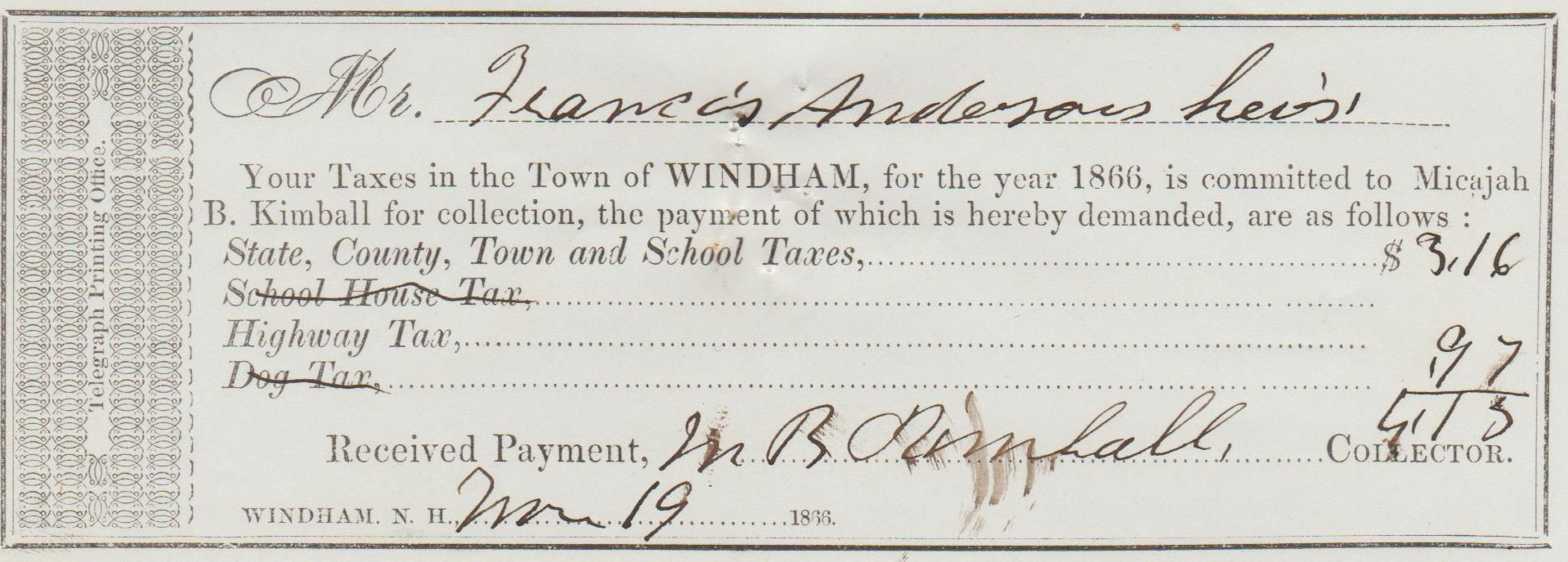
1866 Windham tax bill showing the newly introduced "Dog Tax"